


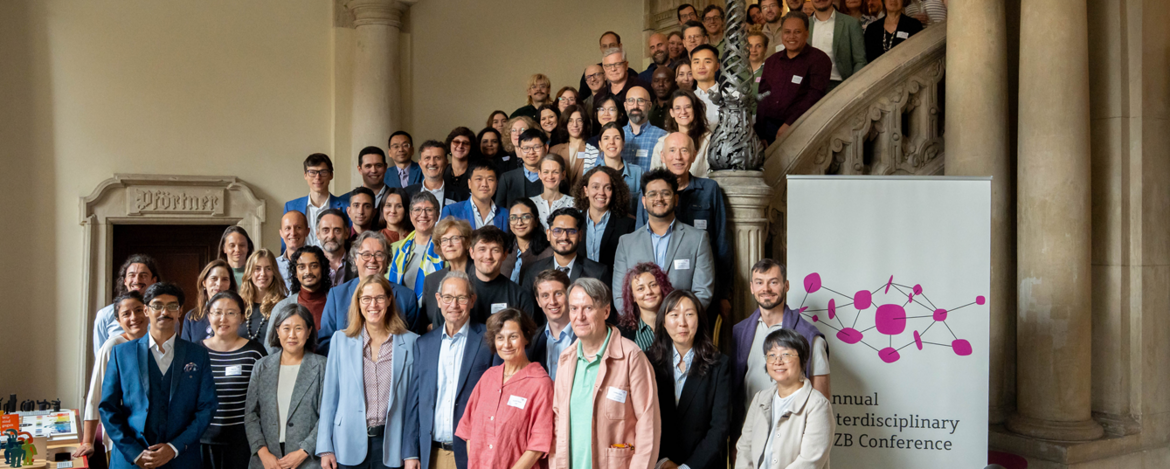
Challenges to the International Order: Causes and Consequences
More than 100 international researchers exchanged views on the various “Challenges to the International Order: Causes and Consequences” at the 2nd Annual Interdisciplinary WZB Conference. The discussion focused on international order, trade, globalization, national sovereignty, climate policies, digital governance, work, prosperity and migration. The exchange was initiated by WZB President Nicola Fuchs-Schündeln, and co-organized by Steffen Huck, Yasemine Soysal and Michael Zürn.
Impressions of the first day
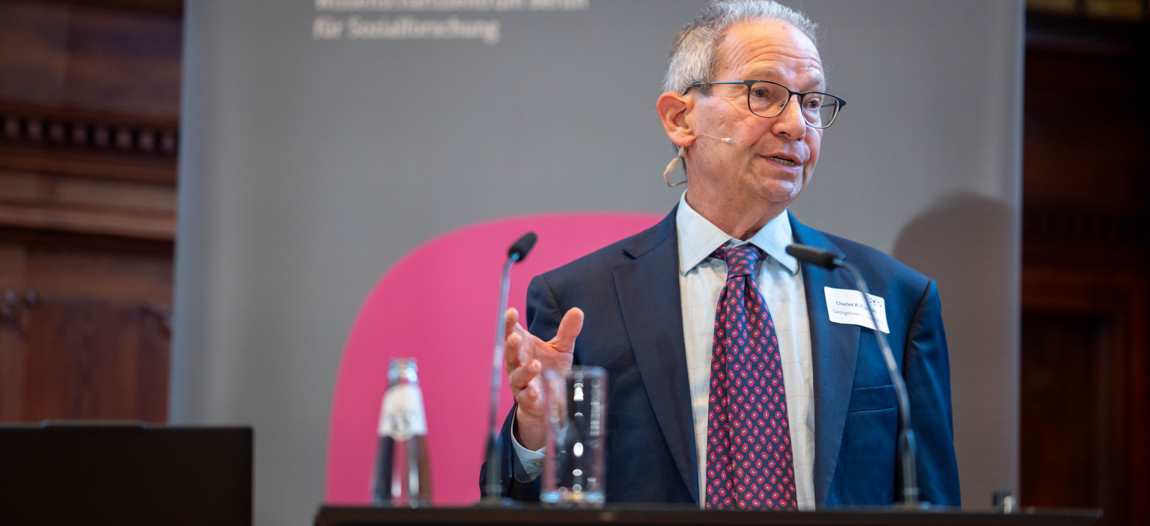
The Gramscian "interregnum"—that period where the old is dying and the new is yet to be born—served as the conceptual framework for Charles Kupchan’s opening keynote to the conference. He argued that an "ordering moment" is necessary to bring this interregnum to an end. Kupchan pointed toward a specific direction: a polycentric world where regional alliances play a more prominent role. He suggested moving away from notions of re-industrialization, arguing instead for a new education and training system and a new social contract tailored to the digital era.
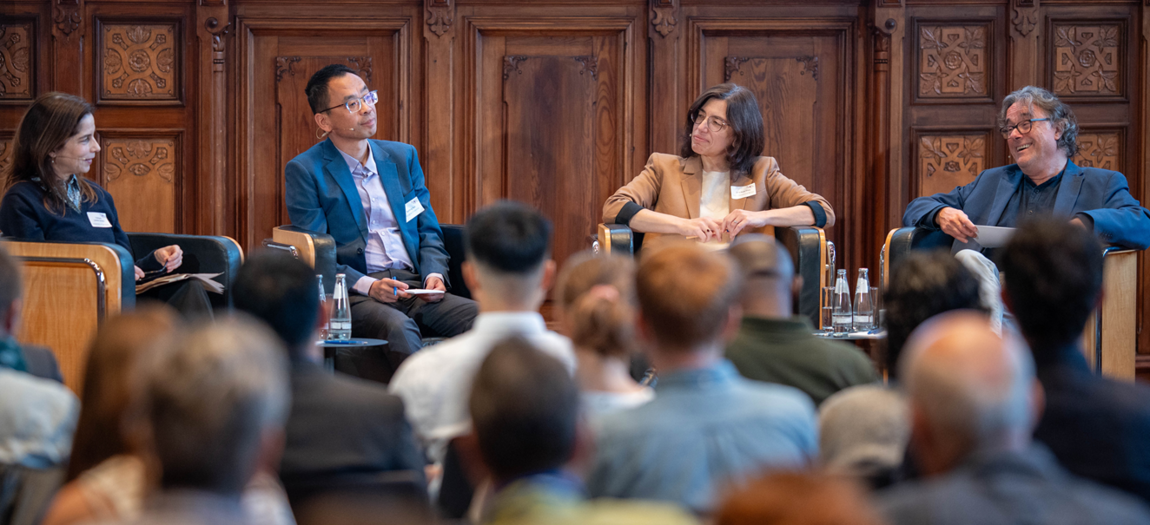
In the panel "Possible Futures of International Order," the participants discussed various scenarios proposed by WZB Director Michael Zürn: a new systemic conflict, a rules-based order, a world shaped by power politics and anarchy, and regional alliances. No one voted for Option 1. Cristiane Lucena Carneiro ( Universidade de São Paulo) saw the most potential in reforming the rules-based order. Lora Anne Viola (Freie Universität Berlin) largely agreed, adding that combined with regional alliances, it could be worthwhile to invest in "flexible multilateralism." For Xuefung Sun (Tsinghua University), however, the trend is a "return to the future"—Option 3. He called for a more concrete approach to the question of the future: "How can we avoid hot and cold wars?" Despite their differences, all panelists agreed in the end that they still believe in the power of negotiation and the collaboration between actors.
To close the first day, Beth Simmons (University of Pennsylvania) gave a keynote on borders. Using various datasets, she illustrated how borders are gaining importance worldwide. From fortifications and drones to biometrics—$54 billion was invested globally in high-tech and conventional methods in 2025, with an upward trend. The consequences are almost universally negative. Beth Simmons' conclusion is clear: we need better border governance characterized by participation, transparent accountability, and clear rules regarding migration and asylum.

Impressions of the second day
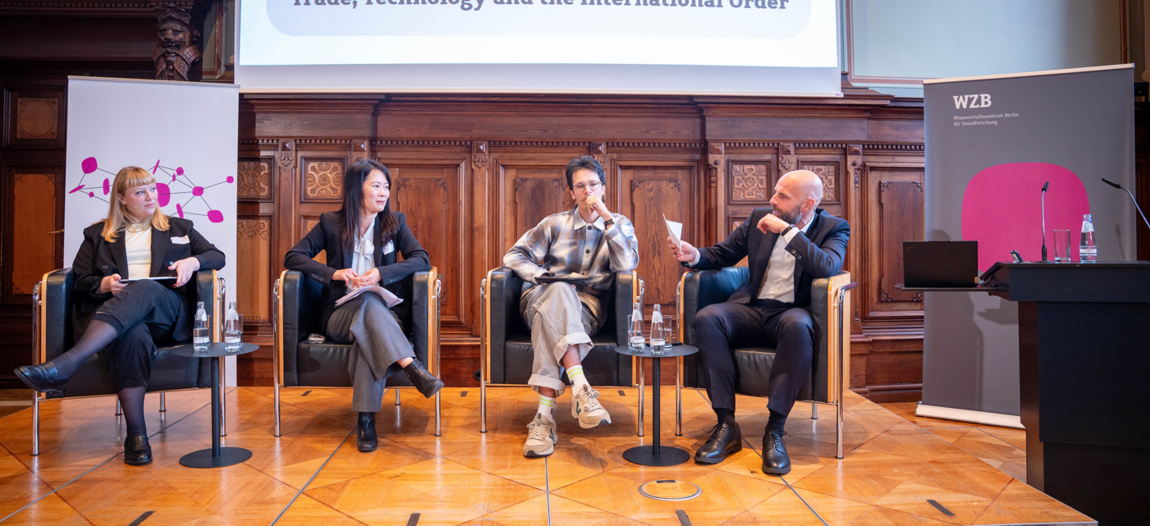
How are new technologies like AI and digital platforms changing the terms of interdependence and global politics? And what are the implications of this technological shift for globalization and an open world economy? These questions were at the heart of the opening panel of the second conference day. Anita Gohdes (Hertie School), Robert Gorwa (WZB), Ya-Wen Lei (Harvard University), and Christian Rauh (WZB) brought their diverse disciplinary perspectives into a vivid debate.
The final two keynotes of the conference focused on the role of the economy in shaping a sustainable international order—providing an action-oriented and cautiously optimistic conclusion to a conference that made it very clear exactly what is at stake.
Dani Rodrik, economist at Harvard, outlined a predicament he describes as the "Trilemma," involving three incompatible goals: hyper-globalization, national sovereignty, and democracy. According to Rodrik, it is impossible to achieve more than two of these simultaneously. He explores a potential way forward in his newly published book, “Shared Prosperity in a Fractured World: A New Economics for the Middle Class, the Global Poor, and Our Climate,” centering his approach not on international cooperation, but on what he calls "embedded liberalism."

Katherine Tai took a broad historical perspective in her keynote, looking back at the years following the Great Depression and World War II. She noted that the planned International Trade Organization never came to fruition, despite embodying principles that are more relevant today than ever: rules for environmental protection, reconstruction plans for former colonies and war-torn countries, and measures against monopolies. As founder and director of the Coalition for New Trade—a platform connecting politics, business, and society—Tai urgently warned that we must remember that the economy cannot be designed by elites, for elites.
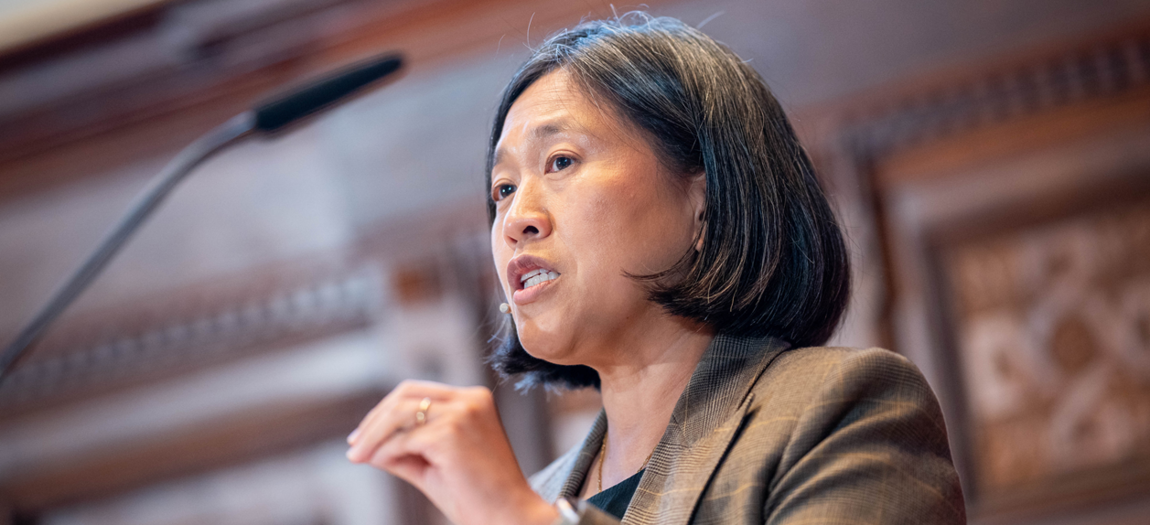
Her closing remarks served as a conclusion for the entire conference. Where, she asked, could one better contemplate the opportunities brought by systemic upheavals than in a city that has experienced so many of them? Titled “After the Rupture: What Comes Next?”, her presentation provided a fitting end to the event. The 2nd Annual Interdisciplinary WZB Conference has certainly provided several ideas on how to answer that question.
Thanks to all contributors, participants, organizers and our cooperation partners from CEPR - Centre for Economic Policy Research and Center for American Progress. We are looking forward to seeing you next year to our 3rd Annual Interdisciplinary WZB Conference on “Gender” from 6-8 October 2027!