


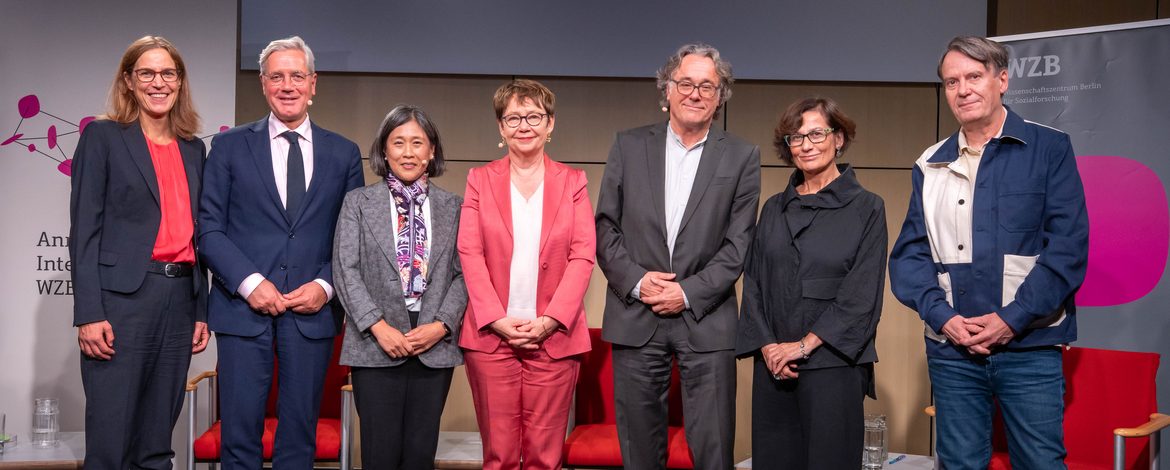
The International Order Under Pressure
What do we look at when we speak of the transformation and decline of the international order? At the people suffering from wars and crises? At the theories that seem to be losing their validity? At new weapons and means of waging war, and at the rapid development of tech companies and AI? At the institutions under pressure?
The 2nd Interdisciplinary WZB Annual Conference tackled a major topic. It opened on October 7 with a public dialogue titled “The International Order Under Pressure—Is It Time for a Reorientation?” at the Academy of Arts at the Brandenburg Gate. In her opening remarks, WZB President Nicola Fuchs-Schündeln recalled the Hamas attack on Israel on October 7, 2023, and Russia’s war of aggression against Ukraine.
These wars and crises reveal deep fissures in our international architecture. From a social science perspective, these events do not merely cause immediate harm, says the WZB President. They are accelerating the transformation of the international order and revealing a system fragmented by geopolitical polarization. What happens when the rules-based order is unable to prevent violence? What happens when the institutions created to maintain peace and order no longer function? And what happens if the pillars of our security architecture—such as NATO—can no longer be taken for granted? This also raises questions about sound economic management: Does the foundation of our global economy, based on the principle of free trade, still function in today’s world, or is it time for a new, more resilient system?
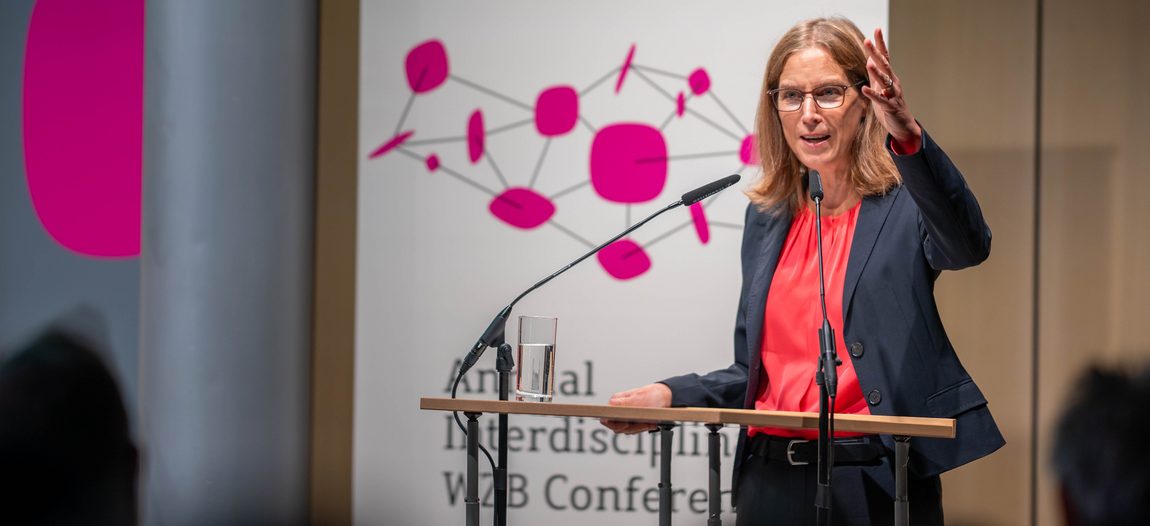
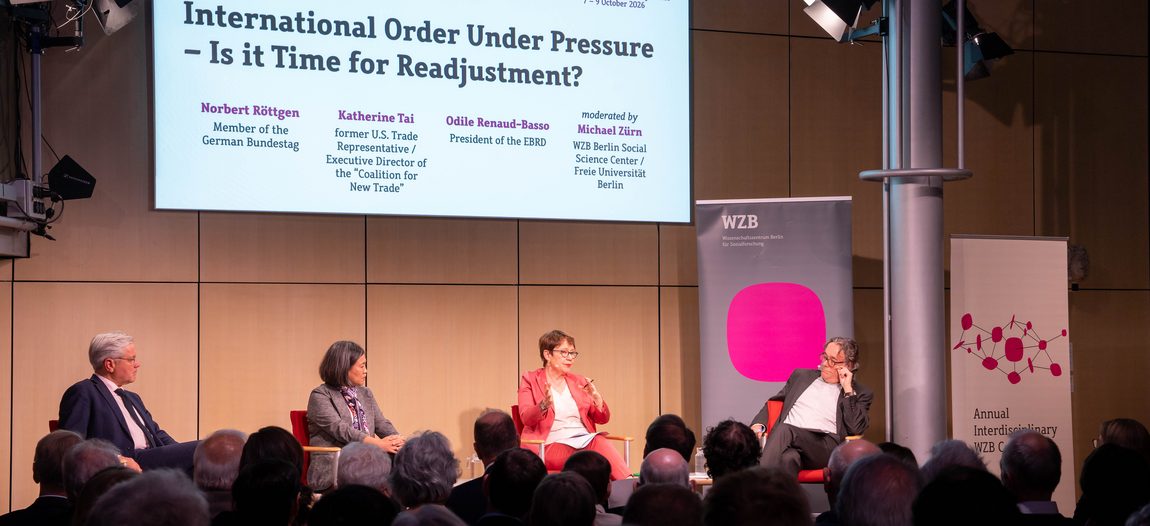
These questions were discussed with our panelists, moderated by WZB Director Michael Zürn, who has dedicated his research career to the study of institutions and the international order:
-
Odile Renaud-Basso, President of the European Bank for Reconstruction and Development (EBRD), and the first woman to lead a multilateral development bank. Under her leadership, the EBRD has become the main institutional investor in Ukraine while also supporting economic activity in other crisis-affected regions.
-
Norbert Röttgen, member of the German Bundestag since 1994. A former Federal Minister and Chair of the Foreign Affairs Committee, he is one of Germany’s leading voices on international affairs and the author of several bestselling books, including Democracy and War.
-
Katherine Tai, United States Ambassador and Trade Representative during the Biden Administration. She now serves as Executive Director of the Coalition for New Trade, advocating for a trade policy that preferences the needs of people and planet.
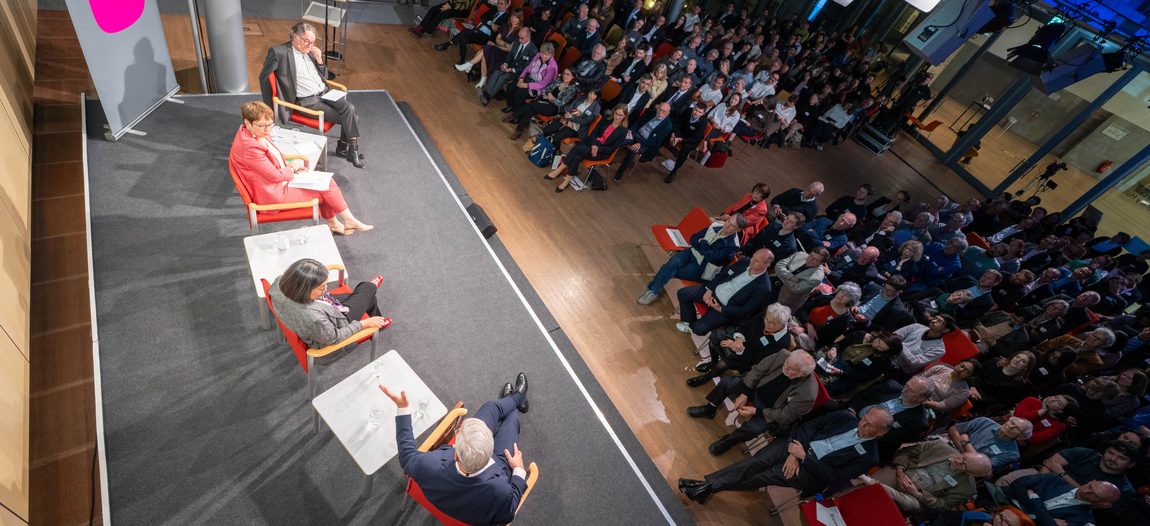
The discussion clarified what we need to focus on: What happens when trade policy is used as a weapon? How do we ensure continued financial support for Ukraine, including to stabilize its economy? How can Europe once again become a strong power—both economically and in terms of security? The diverse perspectives of our guests reflect the goal of our 2nd WZB Annual Conference, “Challenges to the International Order: Causes and Consequences,” which continued on October 8 and 9 at the WZB. After all, the complexity of the modern world cannot be addressed from a single perspective. That is why the goal of our conference is to create a space for dialogue across different disciplines.
8/1/.26/Kerstin Schneider